
HiBob CEO: “Israel’s wounded gave their all, now it’s our turn to give back”
Ronni Zehavi, who also serves as a member of the executive committee of the IDF Disabled Veterans Organization, added at the Israel 2.0 conference by Calcalist and the Anu Banu organization: "We in high-tech live in privilege, and it’s our moral duty to help them."


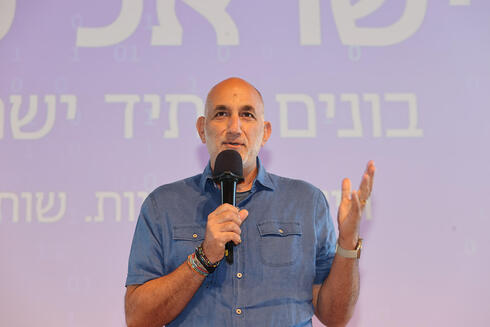
Ronni Zehavi, CEO of HiBob and a member of the board of the IDF Disabled Veterans Organization, spoke at Calcalist and the Anu Banu organization’s Israel 2.0 conference about the dramatic transformations the world of work has undergone over the past decade, and the role Israeli high-tech can play in meeting the national challenge of rehabilitating wounded soldiers.
“HiBob is ten years old, currently serving about 5,000 customers worldwide and nearly one and a half million users,” Zehavi said. “In this decade, we’ve witnessed a true revolution, both technological and social.”
According to him, the first and most profound change is generational: “Gen Z has entered the workforce and now makes up about 30% of it. They bring with them a completely different view of work. When I started working, my parents said tenure was the most important thing. Today, young employees want to know what a company’s contribution to the community is and what social value it creates. Candidates now ask what a company does for society, and this has become one of the most significant factors in recruiting and retaining talent.”
The second shift, Zehavi said, stems from the long-term effects of the pandemic. “The pandemic changed the rules of the game. Attitudes toward remote work evolved, and organizations learned to become more flexible. I also disagree with the apocalyptic predictions about AI. Artificial intelligence doesn’t replace workers, it forces organizations and employees to reinvent themselves. Ultimately, humans and digital agents will work together.”
Zehavi emphasized that social contribution has become central to organizational identity. “In a world where recruiting and retaining talent is difficult, employees choose companies that demonstrate genuine social responsibility. Companies that focus only on profits lose their competitive edge. In contrast, those that serve the community thrive.”
Related articles:
In this context, he discussed HiBob’s partnership with the IDF Disabled Veterans Organization. “As of yesterday, about 20,000 soldiers were added to Israel’s wounded following the Swords of Iron War, and by 2028, that number is expected to reach 100,000. Roughly half are expected to suffer from mental impairments. Most of the wounded are young, on average 30 years old, fighters and reservists who need real help. About 7% are women, which was not the case in the past.”
HiBob, he said, decided to use its expertise to assist the wounded. “We launched a platform that allows them to share their personal stories and experiences. It’s moving, it inspires empathy, and it helps reconnect Israeli society to them. In addition, we’re funding storytelling courses to help them express their journeys. We’re currently establishing ‘Beit HaLochem 2.0’, a new center in Tel Aviv that will serve veterans who have completed physical rehabilitation and are ready to return to civilian life. Later, we plan to open similar centers across the country.”
Zehavi concluded with a direct call to Israel’s business community: “We call on companies to adopt and train the wounded. They gave their bodies and souls for all of us, now it’s our turn to give back. We in high-tech live in privilege, and it’s our moral duty to help them.”


