
Unit 8200 veterans raise $22 million Series A for real-time impersonation defense
Imper.ai’s founders say deepfake and voice-cloning attacks are now “one of the biggest drivers of financial loss,” as enterprises adopt the startup’s prevention-first platform.


Cybersecurity company imper.ai, which develops a platform for real-time cyber impersonation prevention, has raised about $22 million in a Series A round led by venture capital funds Redpoint Ventures and Battery Ventures, with participation from Maple VC, Vessy VC, and Cerca Partners. Six months earlier, the company raised approximately $6.5 million in a Seed round.
Full list of Israeli high-tech funding rounds in 2025
The company’s platform analyzes impersonation risk in real time across widely used communication systems, including Zoom, Teams, Slack, WhatsApp, and Google Workspace, by evaluating multiple security signals across network devices and digital personas rather than scanning content alone.
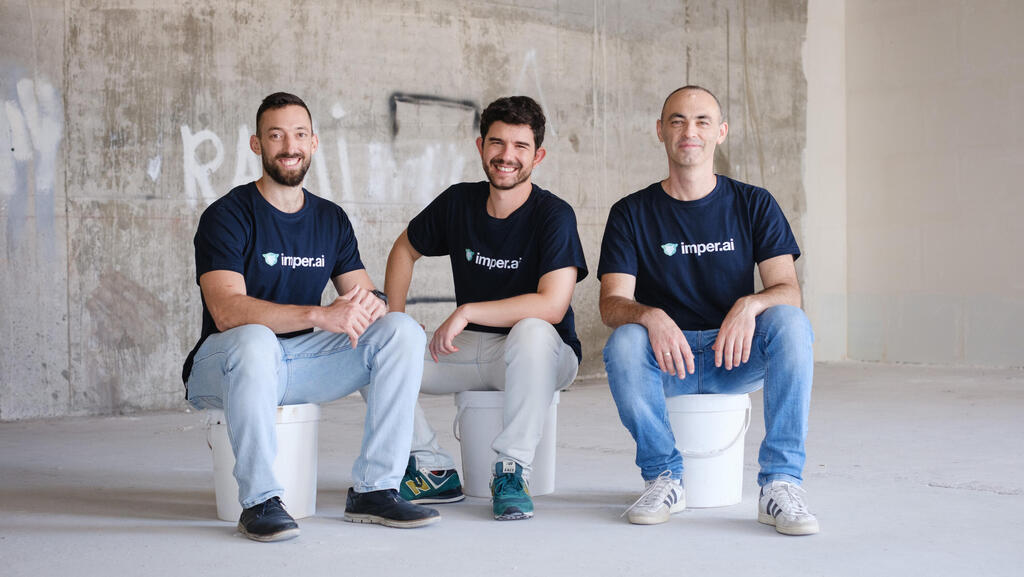
The startup was founded during reserve service in the war, when the three founders, Noam Awadish, Anatoly Blighovsky, and Rom Dudkiewicz, identified a critical gap in protecting real-time communications. Shortly thereafter, in 2024, they established the company.
Noam Awadish (CEO) was formerly Chief of Staff to the EVP of Autonomous Vehicles at Mobileye, following a long service in Unit 8200. Blighovsky (CPO) was the former head of two cyber divisions and CISO of Unit 8200. Dudkiewicz (CTO) was a vulnerability researcher and section leader at Unit 8200.
The company currently employs 30 people, including 25 in Israel, and plans to grow significantly by mid-2026 following the new funding.
Related articles:
The funding will accelerate imper.ai’s expansion and mission to block impersonation threats such as deepfakes, voice cloning, and other forms of social-engineering attacks at their source. Enterprises in finance, healthcare, and technology have already begun adopting the platform to strengthen trust in day-to-day digital interactions.
“AI-driven impersonation has become one of the biggest drivers of financial loss and reputational risk for enterprises,” said Awadish. “Gartner expects that by 2027, half of all enterprises will invest in anti-deepfake and disinformation-security tools, a clear sign this is no longer a niche issue. We built imper.ai to help CISOs strengthen their defenses and focus on prevention instead of crisis response.”


