Meetings with Women Entrepreneurs: Their Business is Everyone’s Success
Yozmot Atid’s annual bus tour last week brought together around 100 senior figures from Israel’s business sector with women entrepreneurs and small business owners who, with support from Yozmot Atid, have overcome significant obstacles, as they build better lives for themselves and their families by developing and growing their own businesses


“The impact of Yozmot Atid on the lives of participants and on the Israeli economy is dramatic, and it can be doubled and tripled with more partners.”
Around 100 senior executives from across Israel participated last Sunday in the annual bus tour organized by Yozmot Atid; a unique initiative aimed at connecting business leaders with women entrepreneurs and small business owners from all over the country, from Eilat to Kiryat Shmona.
Many of these women were directly affected by the war of October 7. The tour’s goal was to highlight the economic and social contribution of small businesses within Israel.
Among the participants were: Nissim Bar-El, founder and president of Yozmot Atid; Ifat Reiter, CEO of AIG; Sigal Regev, Chairperson of Danal; Naama Halevy-Pear, Head of Social Banking at Bank Hapoalim; Tomer Cohen, CEO of Wolt; Hadas Ze’evi, CEO of Livnat Poran; Arik Frishman, CEO of PayBox; Limor Becker, CEO of Hamilton Line Israel; Shirly Fadida Dagan, CEO of Gav Systems; Sivan Shmary Dahan, founder of Idea VC; and Revital Ben Natan, CEO of Ofakim.
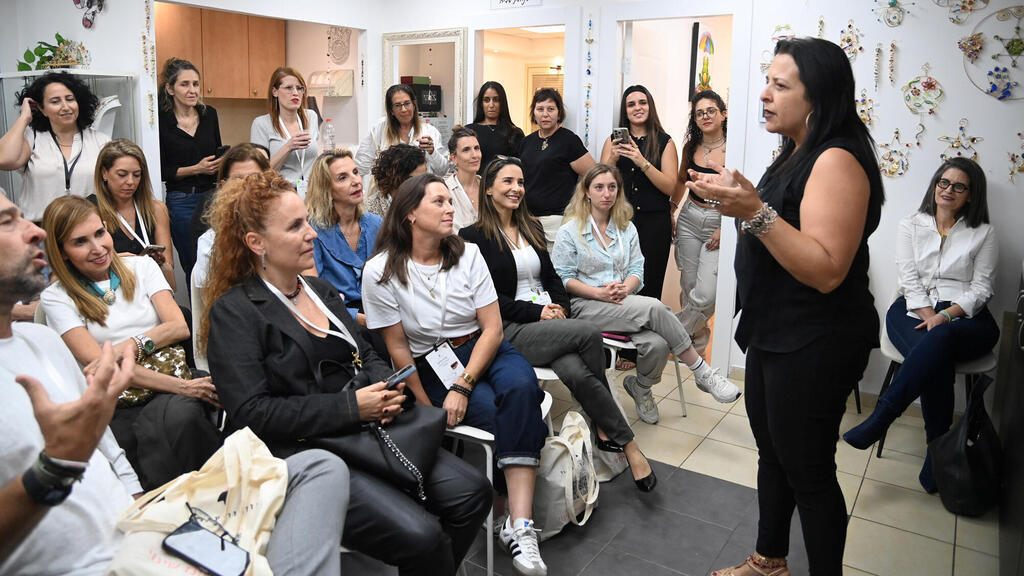
The tour which set off from the Peres Center for Peace and Innovation in Jaffa, was led by Yozmot Atid’s CEO, Tsofit Gordon, and its Chairwoman, Bat Sheva Moshe. Throughout the day, participants visited the businesses of women entrepreneurs, graduates of Yozmot Atid and heard their inspiring and resilient stories of how they lifted themselves from hardship and challenging situations in life to build successful businesses, support their families, and move toward a better future.

60 million shekels in revenue
“Yozmot Atid is the most impactful organization you can invest in,” said Bat Sheva Moshe at the opening of the event. “There are many ways to help people in crisis, but the most incredible gift you can give a person, is the ability to help them to help themselves, with their own two hands. The effect that Yozmot Atid’s work has on the lives of its participants and on the Israeli economy is extremely powerful, and it can be doubled and tripled with more partners and investment in our programs.”
Tsofit Gordon said, “Particularly in such a challenging year, we see how investing in women entrepreneurs strengthens both the community and the Israeli economy.”
Yozmot Atid was founded a decade ago by entrepreneur Nissim Bar-El and supports around 1,100 women each year, Jewish, Arab, secular, ultra-Orthodox, new immigrants, Bedouin, Druze, and others from Israel’s geographic and social periphery, through the process of launching small businesses and achieving financial independence. Today, thanks to Yozmot Atid, about 5,000 women-owned businesses are operating, generating roughly 60 million shekels in net revenue and saving the state an additional 60 million shekels in supportive payments.
The event opened at the Peres Center with a panel titled “From the Frontline to the Frontline of the Economy,” moderated by Noa Tamir, CEO of Calcalist. Participants included Naama Halevy-Pear, Head of the Social Banking Division at Bank Hapoalim; Nissim Bar-El, President of Yozmot Atid; Sigal Regev, Chairwoman of the Danal Group; and Vicky Ganach-Sermani, an entrepreneur and Yozmot Atid graduate who joined the organization nine years ago and is now the owner of a beauty and skincare clinic, a holistic therapist, and also a mentor with Yozmot Atid for other women who are starting their entrepreneurial journey.
Halevy-Pear spoke about the bank’s Social Banking Division: “This division represents a long-standing and far-reaching agenda of the bank. We are part of the community, and we have both the duty and the privilege to help reduce social gaps and create opportunities. We have a financial perspective that recognizes the importance of small businesses to the Israeli economy, and when it comes to women-owned businesses, we see it as a true obligation. We are proud to be partners of Yozmot Atid.”
“Bank Hapoalim helped shape part of Yozmot Atid’s character, and that’s what motivated us,” said Bar-El, and Halevy-Pear added: “Thanks to the partnership, we were able to create programs each year tailored to the most urgent issues affecting the country, such as an initiative bringing together Jewish and Arab women entrepreneurs from East and West Jerusalem to work together. It’s much more than money, and we are proud to be partners in strategies for initiatives like these.”
“Offering support in marketing and financial management helps, of course, but if a woman doesn’t decide this is what she wants, nothing will help. These women deserve all the credit for what they've achieved,” said Regev, offering a few tips on marketing.

The panel concluded with Vicky Ganach-Sermani, who about ten years ago was on the verge of losing her home and children and was working as a cleaner. “When I came to the meeting with Yozmot Atid, a light went on. They gave me the opportunity to start a business and for my voice to be heard.”
The first session was with Dana Cohen (32), an inspiring entrepreneur who founded the woodworking studio The Wood Fairy four years ago. At the time, she worked as a data analyst at a high-tech company, but her life changed when she became pregnant and separated from her partner. She received full custody of her child and was fired from her job. Cohen picked herself up from personal and financial setbacks and fulfilled her dream of turning woodworking into a profession. Today, she manages a workshop in Hod Hasharon and runs woodworking workshops there and across the country. “I faced an emotional barrier and needed someone by my side to succeed, Yozmot Atid was there for me then, and they continue to support me today.”
From there, we travelled to Rishon Lezion to visit Dikla Cohen’s studio, where she designs jewellery. From the age of 16, she sold jewellery to help support her family and built a business with her own two hands. A few years ago, she divorced, had to leave her home with four children, and close her business. Thanks to Yozmot Atid, she rebuilt and upgraded her business. Today, she sells to stores and private clients, but the heart of her thriving business is a jewellery studio which offers workshops and online classes for remote learning. “Thanks to Yozmot Atid, I learned how to set financial goals, achieve them, and adapt to any situation or change,” she said.
Liqueurs from Northern Fruits
At the end of the tour, participants met Olga Rodshavsky, a resident of Kfar Vradim, who founded Olgar Distillery. Five years ago, she established the distillery on the outskirts of Kiryat Shmona, next to the Lebanon border, where she created liqueurs using only fruits from farms from northern Israel. When the war broke out and the area was evacuated, her business came to an abrupt halt.
In the midst of the crisis, she turned to Yozmot Atid and joined their business recovery program. With the support and guidance, she received from the business advisor she was able to manage her remaining resources, sell her stock, and launch a marketing campaign that opened doors to collaborations both in Israel and abroad.


