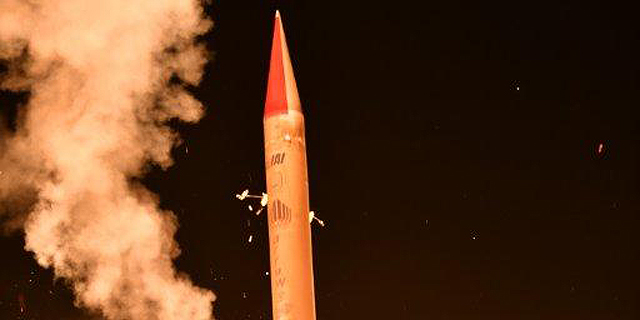
“Other countries have air-defense systems, but Israel’s are better”: Arrow 3 lands in Germany as Israel pursues new mega deals
Successful delivery to Berlin fuels fresh negotiations across Europe and Asia for the long-range interceptor.


Israel Aerospace Industries (IAI) and the Ministry of Defense are in talks with several countries regarding the possible export of the Arrow 3 air-defense system, Calcalist has learned. A senior source involved in the discussions said, “These are several negotiations taking place simultaneously between Israel and countries in Europe and other parts of the world, and there is a high chance that at least some of them will mature into new deals in 2026 and 2027. Global demand for the Arrow 3 is enormous.”
Arrow 3 has served as Israel’s primary defense system over the past two years, during which hundreds of ballistic missiles were launched at the country from Iran and Yemen. Its operational success during the heavy barrages of April and October 2024 - and even more so during the 12-Day War in June 2025 - impressed foreign militaries and significantly increased international interest, particularly among armies undergoing rapid rearmament to upgrade both offensive and defensive capabilities.
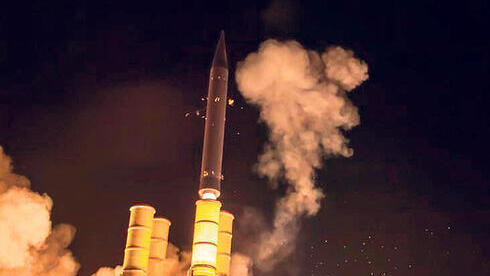
Today, a ceremony will be held at a German Air Force base to deliver the first Arrow 3 battery, which is expected to become operational in the coming days. About two years ago, Germany ordered Arrow 3 batteries and interceptor missiles from IAI as part of a deal worth roughly 14 billion shekels, the largest in the history of Israel’s defense industries and the first export of the Arrow system.
The Israel-Germany missile deal required special approval from the U.S. government, which provided consistent funding during the Arrow program’s development. These budgets also enabled Israel to procure its own interceptors, designed to destroy ballistic missiles while they are still in space.
Future Arrow 3 export deals will similarly require U.S. approval. Israeli officials told Calcalist that, as with the decision made by former President Joe Biden, current President Donald Trump may also authorize such agreements. According to one source, the emerging deals “will be made with countries friendly to Israel and the U.S., and that feel exposed to ballistic-missile threats. The deal with Germany is just the beginning.”
IAI CEO Boaz Levy said the delivery of the German system is being completed about a month ahead of schedule, even though the October 7 war erupted days after the contract was signed. “We are delivering the same missiles that we developed for the IDF, so all that remains is production, and we know how to meet the schedules we committed to, even under extreme wartime conditions,” he said.
In light of wartime lessons, IAI and the Defense Ministry have accelerated development of the Arrow 4 system, intended as a complementary tier to Arrow 3. Arrow 4 will replace Arrow 2, first delivered to the Israeli Air Force in 1998. While Arrow 3 intercepts threats at long range, Arrow 4 is designed to provide a second or even third interception opportunity if the initial attempt fails. Levy said production of Arrow 4 will begin soon. Tomer, a government-owned company that manufactures missile engines, is also a beneficiary of the Germany deal.
About six months ago, senior German Air Force officials signaled interest in purchasing Arrow 4 once it is developed. Germany’s interest, combined with Israel’s evolving air-defense needs, is a major driver behind the accelerated development timeline. IAI is also working on Arrow 5, which is expected to further enhance the capabilities currently provided by Arrow 3.
In recent weeks, it has become increasingly clear that the end of the war in Gaza is benefiting Israel’s defense industries, allowing for the advancement of deals that had been delayed or frozen due to concerns about negative public opinion toward Israel. This shift is reflected in Thailand’s recent move to accelerate a deal worth more than $100 million with IAI for the acquisition of a Barak MX air-defense system.
This marks the first time Thailand has purchased an Israeli air-defense system. The agreement includes an option to expand the contract. Barak MX intercepts aerial threats, such as cruise missiles, helicopters, fighter jets, UAVs, ballistic missiles, and rockets, at distances between 35 and 150 kilometers. The system can be deployed on land or aboard naval vessels. Thailand’s primary motivation is the accelerated acquisition of long-range rockets and ballistic missiles by neighboring Myanmar and Cambodia, supplied by North Korea.
Unlike the Arrow 3, the Barak system is easier for IAI to market because it is an entirely Israeli development, funded without U.S. participation. This helps explain the rapid pace of Barak MX sales: Thailand is set to become the eighth country to acquire the system. Barak MX has already been purchased by the Israeli Navy, Cyprus, Slovakia, India, Azerbaijan, and, according to foreign reports, Morocco and the UAE. Even before the Thailand deal, Barak MX generated roughly $10 billion in revenue for IAI over the past eight years, making it one of the company’s most profitable systems.
Additional sales appear likely. Greece, for example, is preparing a multi-layered defense procurement plan totaling around $3.5 billion, close in scale to the Germany deal. The agreement is expected to be structured as a government-to-government (G2G) deal involving IAI and Rafael, and would include Barak MX, David’s Sling, and Spyder systems, replacing Russia-made defenses. Acting National Security Council chief Gil Reich, the Prime Minister’s military secretary Major General Roman Gofman, and other senior officials recently traveled to Athens to advance defense-cooperation agreements.
Related articles:
“The world has no choice, it needs air-defense systems, and Israel has the greatest experience in this field,” said TSG President Pini Yungman, formerly head of Rafael’s air-defense division and a key figure behind the development of Iron Dome and David’s Sling. “Over two years of war, no fewer than 35,000 aerial threats were launched at Israel. Israeli industries have accumulated enormous operational and engineering experience, which gives them an edge. Other countries have air-defense systems, but Israel’s are better,” he said.
TSG, which develops technological solutions for defense and civilian sectors, announced its first cooperation agreement with Retia, part of the Czech CSG group. The companies will jointly develop a command-and-control system offering a multi-sensor aerial picture focused on low-altitude threats such as drones. Yungman said the partnership will improve the Czech Republic’s defensive response and could serve as TSG’s entry point into additional European markets.
Meanwhile, the delivery of the first Arrow 3 missiles to Germany, at a ceremony attended by journalists from both countries, comes as Germany lifts its arms embargo on Israel, imposed after the cabinet decision to enter Gaza. The acceleration of new deals across Europe and Asia suggests a rapid return to normal business activity for Israeli defense firms, enabling them to seize major opportunities in global markets and leverage the strong performance of Israel’s defense systems during the long war.
While the Ministry of Defense views expanding exports as a crucial revenue source for developing future weaponry, there remains concern that political leaders could be tempted into new military confrontations in the coming months, jeopardizing one of the country’s central engines of economic growth.


