“The more women take part in shaping AI, the more balanced and responsible this technology will become”
With the AI revolution still in its relative infancy, leaders from Women in Tech Israel and KPMG say it presents a rare opportunity for women to establish themselves as leaders in a defining new sector. Just as importantly, they argue that to build technology that serves everyone, women must secure their place in the conversation.


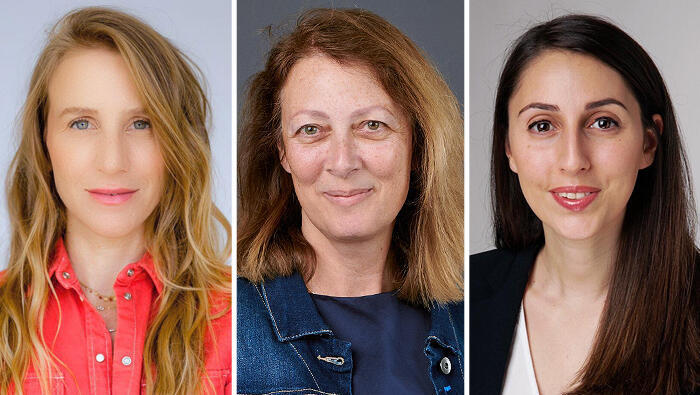
“I think women have a unique role in shaping the age of AI,” says Yarden Israeli, Head of Data Science at KPMG Israel. “We need more diversity of thought when we speak about AI, because the future of AI isn’t just technical. It’s ethical, it’s social, deeply human. The more women take part in shaping AI, the more balanced and responsible this technology will become.”
Any growth sector opens new opportunities for women in tech to “increase our share, which is not balanced,” says Anne Baer, CEO of iKare Innovation and Director of Women in Tech Israel, the Israeli chapter of the global organization. According to Baer, women make up roughly 47.5% of Israel’s overall workforce, yet only 33.5% of the country’s high-tech sector. While strong compared to a global average of 28.2%, representation drops further in technological and managerial roles, and Israel ranks just 14th worldwide for the share of female founders, behind tech ecosystems such as Paris, New York, London, and Sydney.
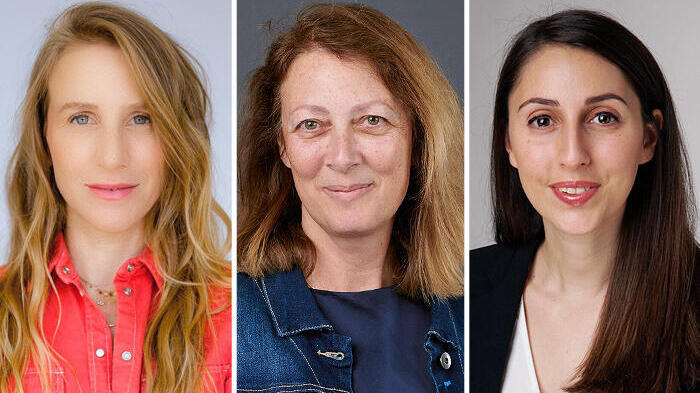
“We need to be in the room,” says Baer. The implications of the AI revolution make it one that women cannot afford to sit out, lest the algorithms that will govern our future be written with biases that fail to represent half the world’s population. She calls for “representativity of women when it comes to defining data sets, defining algorithms.”
But even more so, Baer contends that the emerging AI sector is valorizing human qualities that are becoming increasingly necessary – qualities in which women are particularly well equipped to lead. So while it is generally agreed that women have been historically less likely to put their hands up for leadership roles in tech that men are often quicker and more confident to fill, the rise of AI offers women a rare chance to rewrite the rules as early champions and pioneers of its development.
Baer refers to a LinkedIn post shared by Women in Tech Israel COO Melissa Lax, which draws on a World Economic Forum survey about the “Top Skills for 2030.” “AI and big data are on the top, and around AI and big data you have curiosity and lifelong learning, talent management, systems thinking, leadership and social influence, motivation and self-awareness, empathy and active listening. This is typically feminine,” says Baer.
“Analytical thinking, resilience, flexibility and agility – particularly feminine,” she continues. “Creative thinking, and finally, technological literacy.”
Israeli also believes that the velocity of AI calls for the skillset that women in tech generally excel at. “We operate in this constant uncertainty,” she says. “What we’ve learned today becomes yesterday’s news, and the tools that we just mastered have already evolved. It wasn't like this two years ago. Now we need to deal with a pace that is very fast.”
For Co-Founder and CEO of Myop, Keren Fanan, who is also a Board Member of Women in Tech Israel, women’s natural tendency toward self-learning and multitasking may prove to be yet another advantage in the upskilling race needed to prevail in an evolving AI sector. “No one is going to give you six months paid leave to learn AI. You will have to do it while you’re doing other stuff,” she says. “And I do think that that's what we know how to do.”
Yet those same strengths, she admits, may be the very traits that cause women to self-disqualify before they have even entered the race. If women don’t step forward now, they risk being sidelined as new AI roles emerge.
“On the other end, I'm afraid that for that exact reason, there will be a lot of women that will decide to put that nowhere on the priority list,” cautions Fanan. “That’s what we want to shout out. Not everyone gets the chance to be a part of a massive revolution that changes everything.”
“The biggest challenge is not to miss this train, because now we have an opportunity, and the development of this sector is going to be exponential,” adds Baer. “We need to catch it at the start… to be positioned as entrepreneurs, to be among the co-founders, and to be in the purely technological and managerial positions.”
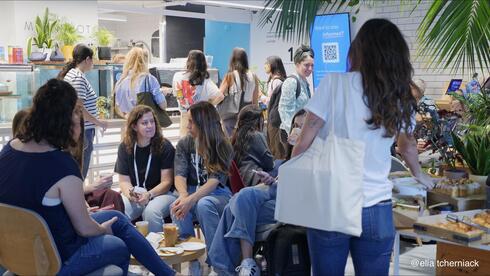
The urgency of this critical juncture for women to cement their place as leaders in AI informed the Women in Tech Israel: AI Workshop, held in partnership with Google and KPMG, a training and networking event designed to help female developers and tech professionals upskill in AI. “The race is equal,” says Fanan. “Everyone can now claim the leadership position, and our goal, our ambition, at Women in Tech is that if AI is resetting the rules, let it also reset the gender gap.”
What is interesting about the AI revolution is that it is characteristically more accessible than past tech booms. “With AI, you don’t have to be an executive to lead the change,” says Fanan. “You don’t have to have a Masters in AI to become the champion in your organization... All you have to do is be an ambassador of a tool or of an AI-driven process.”
Further, she notes where AI can become a bridge and help narrow existing gender gaps that persist in sectors like engineering. “There is today a massive gap between the amount of women you would see in design and product and marketing roles and in engineering roles,” says Fanan. A 2023 McKinsey & Company report demonstrates the divide in tech roles: while women make up a significant share of product and design teams, their representation drops sharply in engineering. However, Fanan remarks, “now we’re kind of with AI shifting non-developers to become developers.”
Related articles:
It is exemplary of how AI is affording the kind of opportunity that levels the playing field, and why it is pivotal that women play ball. “If you are in a technological position, you are less replaceable. And if you are in managerial position as well, you are less replaceable,” says Baer.
Israeli agrees that it is now easier than ever for women to access positions in Israeli high-tech where they have been historically underrepresented, particularly as founders, arguing that the mobile nature of tech today is helping to close the disparities created by women’s traditional role as primary caregivers.
“Today, accessibility makes it possible to be at home, even in bed, with your computer, even with your baby on you, and you can create and build new apps and new capabilities that before required much more time and resources,” she says. “This is the first thing that I think women, not only in the technical space but across all spaces, can start to experience, because I think there is room for everyone. You don’t need to have ten years of coding experience to enter this space.”
As such, for Israeli, women’s role in writing the charter of the AI era begins with the purpose and conviction to decide who holds the pen. “The key here is not to think about what you do, but to think about why you do it,” says Israeli. “If you do it because you want to stay close to technology and close to the machine, you will find the way.”


