Zafran raises $60 million and doubles valuation as it chooses independence over takeover offers
CEO Sanaz Yashar says the company has turned down multiple acquisition offers as demand for its AI-driven CTEM platform surges.


Zafran Security has raised $60 million in new funding, in a round led by Menlo Ventures, with participation from existing investors Sequoia Capital and Cyberstarts, in addition to PSP Growth, Vintage Investment Partners, and Knollwood Investment. The financing, first reported by Calcalist, brings the company’s total raised to $130 million and will be used to accelerate product development and expand global operations. Menlo Ventures, also a major investor in Anthropic, said it views Zafran as a leading contender to dominate the emerging Continuous Threat Exposure Management (CTEM) market, driven in part by its advanced use of AI.
Full list of Israeli high-tech funding rounds in 2025
The company did not disclose its valuation, but said it has doubled its value since the previous round and more than tripled annual recurring revenue (ARR).
In an interview with Calcalist, CEO Sanaz Yashar said that since founding the company three years ago, she has received “many acquisition offers,” all of which the company rejected. “We do not intend to sell. We still have a lot to conquer in the global market,” she said.
According to Yashar, customer interest has surged dramatically: “In the last two quarters, the number of customers approaching us to test the product has tripled, both because of the rise in threats and because of our success spreading by word of mouth.”
Yashar emphasized that investors now expect not just rapid customer growth but rising sales per customer. She described Zafran’s platform as powered by two engines, damage assessment and automated action planning, that together create a new model for exposure management. “There was no company that made a comparison like we do,” he said. “We simulate which fix is the most correct and generate insights that support pre-emptive action.”
Reflecting on shifts in cybersecurity, Yashar added: “The walls that used to protect organizations are no longer relevant. We need to bring prevention to the next stage.”
Yashar said the new funding will support hiring across engineering, sales, customer success, and core infrastructure. “The development in AI is very fast, and we need more people,” she noted. “We tripled our revenue this year and will triple again next year. I hope we won’t be far from unicorn status.”
She described strong demand driven by AI’s dual-use nature: “There is a thirst in the market. AI is helping attackers and defenders, but there is still no complete answer. The same people who worked with us before are still with us, our tools just help them do what they couldn’t do before.”
Despite the company’s growth, Yashar stressed that sales remain a human function: “We are already selling in the millions. We are not Palo Alto yet, but in the end sales are driven by people, and AI doesn’t replace that.” She said Zafran aims to become a “true platform that synchronizes different defense products” and believes the company has “a real chance of winning this category.” Among the company’s investors is Penny Pritzker, former U.S. Secretary of Commerce, who has called Zafran’s technology a “national breakthrough.”
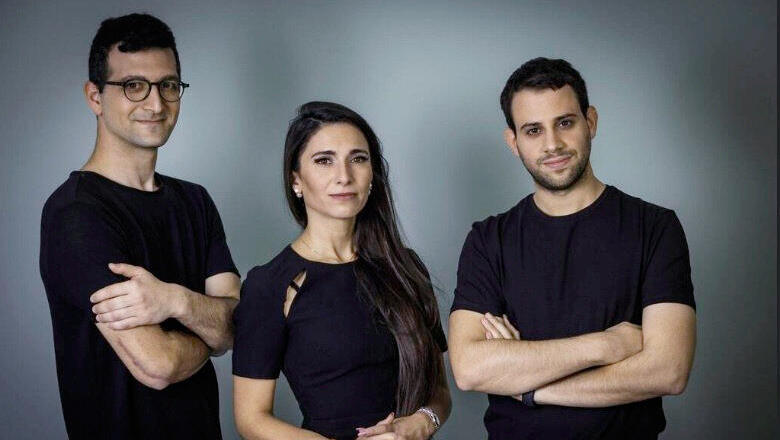
Zafran was founded in 2022 by Yashar (CEO), Ben Seri (CTO), and Snir Havdala (CPO). The company employs about 120 people across Israel, the U.S., and Europe, and plans to hire about 100 more in 2026.
Yashar, who was born in Tehran, immigrated to Israel as a child, and spent 15 years in Unit 8200 before holding senior roles at FireEye-Mandiant. Seri and Havdala, both decorated veterans of Israel’s military cyber units, bring decades of operational experience of their own.
Related articles:
The backdrop to the company’s rise is the accelerating threat landscape driven by AI. Attackers now use AI to instantly scan the internet for newly published vulnerabilities, automatically generate exploit code, and execute complex attacks within hours, processes that previously took days or weeks.
One of the core problems Zafran addresses is the fragmentation between security tools. Vulnerability scanners, endpoint protection systems, network tools, and cloud defenses often operate in isolation, creating gaps that attackers exploit with AI-enabled speed.
Zafran’s CTEM platform offers an integrated solution: continuously identifying vulnerabilities, enriching them with context from the organization’s other tools, evaluating the most effective mitigation path, and executing automated, targeted fixes. The goal is to eliminate exposure before attackers can exploit it.


