Mind the Tech Berlin 2025
From textile recycling to autonomous vessels: The vision behind the Dream Team startups
Autonomous technology against financial fraud, a system that can predict patient response to oncology treatments, an advanced artificial intelligence engine that maximizes the performance of satellite networks and more: 15 companies presented their innovations at the Dream Team event held as part of the Mind the Tech Berlin 2025 conference.



"The talent in the room is simply amazing," said Hilla Ovil-Brenner, founder of Yazamiyot and Showcase IL, at the Dream Team event held as part of the Mind the Tech Berlin 2025 conference hosted by Calcalist and Bank Leumi. According to her, "They were selected from 150 candidates through a precise and selective process. The Dream Team includes diverse and mature companies, but also five early-stage startups. I would also like to thank the amazing team of judges who selected them." As part of the event, 15 carefully selected companies presented their vision.
Re-fresh Global
Re-fresh Global is an Israeli-German materials company that developed the SMART-UP system, a unique and patented biochemical process that transforms textile waste into high-quality raw materials. The company is addressing a global crisis of 92 million tons of textiles being discarded every year and offers to recycle this waste into nanocellulose, bioethanol, and multifunctional fibers. The company employs only seven people and has raised 1.5 million euros so far.

The products produced by the company serve as an alternative to virgin raw materials in the automotive, furniture, and cosmetics industries, thereby contributing to reduced waste and lower pollutant emissions. Through the SMART-UP URBAN system, the company also enables small and medium-sized businesses to adopt sustainable, cost-effective, and environmentally friendly production processes, thus promoting a circular economy in the textile sector.
Viktoria Kanar, co-founder and CEO, said: “Eighty percent of the clothing items we wear are not recyclable. Our smart system knows how to take these clothes and separate the polyester, cotton, and other components, and recycle them. The next big step is to build such a factory at scale. We already have revenue from the portion of customers we work with on recycling, and we are about to raise seed money.”
Environmental entrepreneurs are very affected by regulation. Can you share what your challenges are?
"In early January 2025, the European Union passed a law that prohibits sending these items to third-world countries, so our solution will soon be very, very necessary. We estimate that within two years, every country and every fashion company will need a solution like ours."
Related articles:
Skana Robotics
Skana Robotics develops autonomous vessels and advanced software systems for smart fleet management, as part of an overarching vision to strengthen maritime and national resilience. The company has raised $4.5 million to date. It focuses on creating ready-to-operate, software-based systems that operate both above and below the water surface, while fully integrating the various tools into a unified, flexible, and scalable system.

By combining deep operational knowledge with end-to-end technological control, Skana Robotics enables modern naval forces to operate quickly, at scale, and with maximum precision, thereby transforming how maritime security challenges are addressed.
Idan Levy, co-founder and CEO, explained that “More than 80% of the world’s goods travel by sea, and the threats are increasing. In the past year, we have managed to sign contracts worth $9 million with global customers.”
Asked whether the company needs a larger scale, Levy replied: "We continue to dream of different types of tasks, but different tasks require different systems. Our preliminary process is early identification of the task. On the technological side, the development proves that this entire process can be managed in minutes or hours, not days."
Datricks
Datricks offers an autonomous solution designed to eliminate financial exposures such as human error, regulatory non-compliance, and fraud. In doing so, the solution turns businesses into beacons of airtight financial integrity. Its platform, built to enhance credibility and financial transparency, enables CFOs to improve the bottom line, optimize working capital, and confidently expand their financial operations. Through these capabilities, the platform significantly increases the contribution of CFOs to organizational growth.
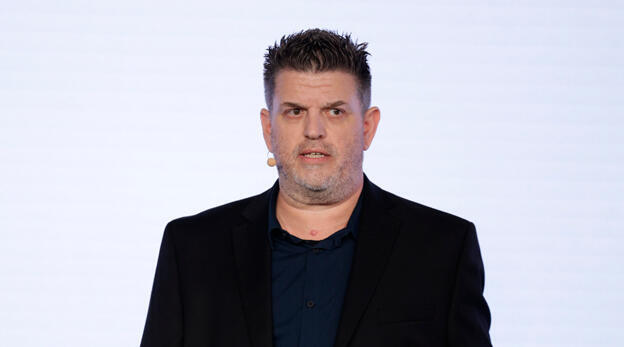
The company, founded in 2019, has raised $19 million and employs 25 people. CEO Haim Halpern said: “I will demonstrate how easy it is to steal money within your organization. I call it the cost of ops, you know something bad is happening, but you don’t know how to prevent it. We estimate that 5% of every organizational flow is lost. To date, since we were founded, we have saved more than half a billion euros that were lost. We believe that people are not meant to check twice, why shouldn’t tools do it? We can check any type of transaction.”
When asked how many clients the company works with, Halpern replied: "We have more than 20 clients, mainly in Europe."
Starget Pharma
Starget Pharma develops smart, targeted radioligand drugs for the treatment of metastatic tumors. The company uses an artificial intelligence-based platform that enables the rapid design of molecules that identify cancer cells and deliver targeted radiation to them while sparing healthy tissue.

The radioligand field is experiencing rapid growth, with regulatory approvals and billions of dollars in mergers and acquisitions. The company is backed by founders with rich backgrounds, including those of UroGen Pharma (listed on NASDAQ), and is leading three therapeutic candidates that are expected to enter clinical trials in 2026 in the areas of breast cancer, sarcoma, and prostate cancer.
“We have two approved treatments today,” said CEO Sigal Cusnir, “for specific types of cancer. But 96% of cancer patients are not treated that way. We ask ourselves how it is possible that the most common cancer treatment, chemotherapy, is still the one that destroys and harms the body. We use AI to examine millions of molecules and how they change. We want to expand the clinical trials across Europe.” When asked about the company’s long-term strategy, Cusnir replied: “Our goal is a quick exit. We see IPOs in this area even in companies that have reached early stages. The reason is that companies are flocking to this field.”
Curesponse
Curesponse is a precision oncology company that has developed an innovative in vitro testing platform that can predict a patient’s response to oncology treatments with over 90% accuracy. The technology allows doctors to choose the most effective treatment from the very first stage, thereby improving the chances of success and reducing side effects. The company employs 15 people and has raised $15 million.

The test is suitable for all types of solid tumors and all major drug classes, and is already in clinical use and covered by private insurance companies. For pharmaceutical and biotechnology companies, Curesponse’s platform accelerates the research and development process, reduces clinical trial costs, and lowers the failure rate.
Guy Neev, co-founder and CEO, presented on stage a case of a cancer patient who may receive inappropriate treatment that would only be discovered after a few months of trial. “Many patients receive a drug, do not respond to it, and switch to another drug,” he said. “When they finally receive a drug that does work, their condition has already worsened. We have developed technology to grow body cells rapidly to test their response to the drug. We have a lab in London and we are also looking for partners in Germany and the rest of Europe.”
Regarding the main barriers, Neev said: “People have been trying to do this for years. It is very challenging to keep a piece of tumor alive outside the body so that we can test it, and that is what has blocked it. We have developed a way to keep it alive, and our technology has been filed as a patent.”
Maverick AI
Maverick AI works to improve the operation of critical infrastructure, which is based on outdated and isolated systems where human errors cause costly downtime. The company offers an innovative solution in the form of a local artificial intelligence assistant, installed on site and providing continuous support to operational teams.
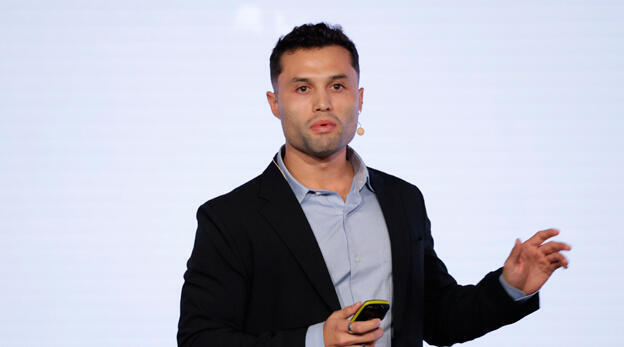
The system captures the knowledge and experience of the best operator in the facility and makes it accessible to the entire team at any given moment. This ensures accurate decision-making, reduced errors, and improved system availability, regardless of network connection or external services.
Yochai Pagi, founder and CEO, said: “Critical infrastructure is a complex world, and organizations invest a lot of resources in protecting it. We take all the protocols and clarify them. The solution is built in the cloud but also works great offline. Our solution eliminates the need for constant monitoring.”
LepreCon
LepreCon’s technology protects banks and their customers from AI-based social-engineering scams, which pose a trillion-dollar global risk. LepreCon’s solution predicts fraud before it happens and blocks it at the first stage. The solution consists of a proprietary psychographic diagnosis based solely on bank data, along with a comprehensive and proprietary model of bank data.
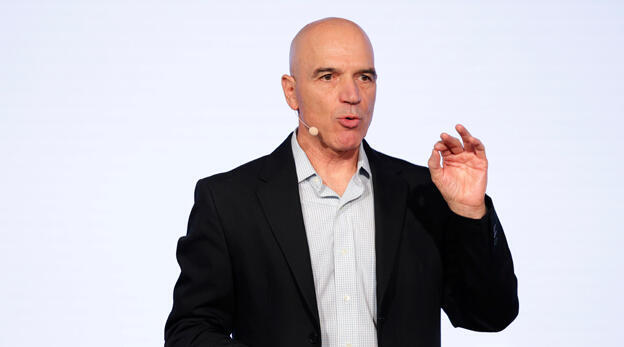
The company was founded by industry experts, including Shlomo Gilead, who was the chief strategist of a bank and a credit card company and is the current co-founder and CEO, and Amir Raskin, a banking data and analytics expert and co-founder of HyperRoll (acquired by Oracle). Gilead explained: “This is the fastest-growing crime in the world. The reason is that it is almost undetectable. Our tool is designed to think like a criminal, like a fraud planner. The first question we ask is who is most vulnerable. We are facing a new era of fraud, and it requires a new era of fraud-protection technologies.”
Asked why the company was called LepreCon, Gilead replied: “First of all, preCON, meaning we are one step ahead of the criminals. Second, we are mischief makers, because we have to think like those who cause criminal mischief.”
QuamCore
QuamCore is a deep-tech company operating in the quantum computing sector, founded with the aim of significantly increasing existing capabilities in this field. Currently, quantum computers are limited in size due to heat problems (thermal bottlenecks) and their dependence on many cables within the cryogenic “refrigerator” in which they operate. The company solves this problem by developing advanced quantum processors that can contain up to a million computing units (qubits) within a single system.
The company’s main innovation is the integration of smart and energy-efficient digital control components within the cold environment, which eliminates the need for complicated connections and reduces thermal limitations. The ultimate goal is to create reliable and inexpensive quantum systems for practical use in areas such as artificial intelligence and drug development. The company operates on a B2B business model, is in the A-stage, and its total funding stands at $33 million.
“Our solution shrinks a football field to the size of a box,” said Alon Cohen, founder and CEO of QuamCore. “Instead of a billion dollars, we reduced costs to a million dollars. Instead of a consumption of 12 megawatts, we reduced it to 20 kilowatts. In practical terms, we achieved 1,000 times improvement in size, cost, and power.”
Imagry
Imagry is a leader in generative autonomy in the automotive sector, providing real-time intelligence for operating vehicles in the physical world. The company’s platform, Imagry Cortex, enables vision-based autonomy without the need for high-resolution maps, laser sensors or the cloud. Unlike rule-based systems, the platform learns from experience and adapts to any road, vehicle or condition, similar to a human driver, but in an improved way.

The technology is already being implemented in public transportation and commercial vehicles, providing a sustainable autonomy solution for public transport and private vehicles. The platform’s architecture is hardware-agnostic and integrates seamlessly with existing systems, offering a cost-effective, production-ready autonomy solution for automakers and public transportation operators. Imagry operates on a B2B business model, is in its B round and has raised $60 million in total.
“Japan is a successful market for us because it turned out that within a decade, 40% of bus drivers are going to retire, and this is in addition to the existing 20% shortage of drivers in the country,” said CEO Eran Ofir. “Therefore, the Japanese government has prepared a very aggressive plan, within which they plan to deploy autonomous buses in 100 cities by the end of 2027.”
RespirAI
RespirAI operates in the healthcare sector as a digital health company developing an AI-based home-monitoring platform for patients with chronic respiratory diseases. The platform uses continuous and passive data collection from sensors approved by health authorities, and analyzes multi-parameter physiological signals to identify changes in patients’ conditions and provide actionable clinical insights.
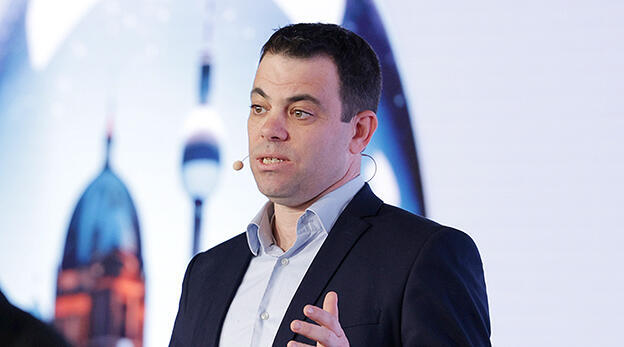
The company’s initial focus is on chronic obstructive pulmonary disease (COPD), with the aim of improving treatment outcomes, reducing hospitalizations and readmissions, and enabling proactive and personalized disease management both in clinical settings and in the patient’s home. The company operates on a B2B2C business model, is in the Seed stage, and has raised a total of $4.3 million.
“We are currently conducting pilots in the US with leading strategic partners, including Mayo Clinic and a home-care company,” said CEO Nimrod Bin-Nun. “Our first product, a mobile application that will provide holistic treatment for those suffering from chronic lung disease (COPD), is expected to be launched on the market in the coming months, first in the US and later in Europe.”
LumenGuides
LumenGuides operates in the medical device sector and is developing Naviscope, an autonomous, disposable and radiation-free robotic navigation platform designed for bronchoscopy procedures. Currently, existing navigation systems fail to reach approximately 40% of lung lesions and require the use of external means such as CT, fluoroscopy or electromagnetic navigation, processes that are expensive, lengthy and harmful due to radiation exposure.

Naviscope is revolutionizing the field through fiber-optic sensors that produce 3D mapping of the airways from within the lung itself, and through autonomous AI-based robotic guidance, without the need for external imaging. It is a disposable solution, safer, more economical and faster than traditional methods, offering an innovative, accessible and effective alternative that reduces dependence on expensive and complex technologies. The company operates on a B2B model, is in the Seed round, and has raised $2.5 million.
“Sixteen years ago, I lost my father,” said founder Limor Prigan. “Eight years later, I lost my mother. That same week, we found out that my younger brother also had cancer. And through all these losses, one question kept echoing in my head: ‘How is it possible that planes can fly, cars can drive autonomously, and yet inside the human body we are blind?’” This, she says, is what led her to found the startup.
Always Connect AI
Always Connect AI operates in the smart satellite communications optimization sector and develops an advanced AI engine that maximizes the performance of satellite networks through autonomous and multi-path optimization in real time. The company’s technology is installed as a lightweight add-on on any device or platform, and enables smart management of communication links in geostationary, medium and low orbits, without the need for hardware changes. The system learns traffic patterns, identifies anomalies and dynamically routes data to ensure a stable, efficient and mission-critical connection.

The solution is suitable for sectors such as security, robotics, transportation and commercial satellite systems, and enables advanced communication management even in challenging conditions. The company operates on a B2B model, is in the seed fundraising stage, and its total fundraising is $660,000.
“During the war over the past two years, 40% of military drones did not reach their destination due to disconnections in the satellite communication between them and their operators on the ground,” said Michal Hubschmann, CEO of Always Connect AI. “When a military robot stops working in the middle of a mission because of a communication disconnect, the entire mission fails and soldiers’ lives are in danger.”
Alviv Laser Solutions
Alviv Laser Solutions operates in the medical technology sector and focuses on developing innovative laser-based solutions for clinics and outpatient centers. The company’s first solution is a breakthrough, fast, safe and painless treatment for patients suffering from fecal incontinence, a problem that affects approximately 9% of the global population. The company’s innovative treatment changes the way the problem is addressed by focusing on solving the clinical cause itself, not merely the symptoms.

Alviv’s unique technology is based on painless laser treatment that enables restoration of sphincter function through controlled tissue regeneration. The solution offers a new, safe and effective treatment method, with proven results in initial clinical trials, and a treatment model that can be scaled across outpatient clinics with the aim of improving the quality of life for millions of patients. The company operates on a B2B business model, is in the seed fundraising stage, and its total fundraising is $800,000.
“We completed a first-in-human trial with great success, establishing safety but also efficacy close to 90%,” said CEO Shira Doron. “This means that we have been able to move patients from daily incidents that require them to use adult diapers, all the way to a situation where they don’t even need protection from leakage. And this is proof that we are definitely changing people’s lives.”
dot SAGA
dot SAGA operates in the safety and communications sector and develops a next-generation communications and safety network for complexes and events. The company’s overall solution consists of wearable devices, a private transmission-based network and a smart command platform powered by AI. The unique system enables real-time communication, location tracking and event management, even in situations where cellular networks are unavailable.

The technology is designed for large-scale events, ski resorts, critical facilities and stadiums, and allows operators to respond quickly, prevent failures and manage operations intelligently. Key features include speech-to-text conversion, predictive analytics and distress alerts. The solution replaces outdated communication systems and offers a modern alternative for improving safety. The company operates on a B2B model, is in the seed fundraising stage, and its total fundraising is $270,000.
Noam Goldman, CEO and founder, demonstrated a case in which dot SAGA’s product could be used: “An amateur skier named Sarah went to the ski resort, got her equipment and reached the slope, but fell and was buried under the snow. When she tried to take out her phone to call for help, she discovered that she had no cellular reception, which left her disconnected in an emergency. But if she had equipped herself with the SAGA safety tag, one click would have connected her instantly to the control center, without dependence on the Internet or a cellular network.”
Hydro X
Hydro X operates in the energy sector with the understanding that clean hydrogen is currently too expensive, with the primary reason in most cases being the costs of storing and transporting hydrogen. Conventional hydrogen storage technologies require extreme conditions of compression or temperature and are therefore energy-inefficient. They use toxic, flammable or explosive materials that are cumbersome and expensive to handle. The result is high operating and capital expenses and complex supply chains.
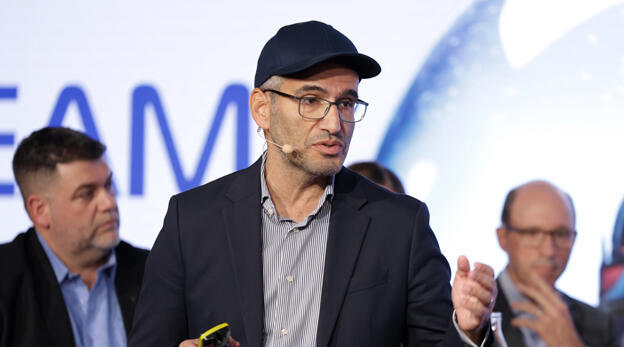
Hydro X is reinventing the field of hydrogen storage and transportation with disruptive technology that allows hydrogen to be stored and transported in a non-toxic, non-flammable, non-explosive and energy-efficient carrier. The company’s solution is designed to lower the cost of storing and transporting hydrogen to below one dollar per kilogram, thus opening the door to the hydrogen economy.
As a child in Paris, CEO Assaf Sayada read a book by Jules Verne that predicted hydrogen would become the energy source of the future. It took 150 years and a massive investment of about $700 billion, but the green-energy industry has so far been stuck behind one significant barrier: the cost of transportation and storage. Now, Hydro X, under his leadership, claims to have found the solution that will unblock the global bottleneck, technology that stores explosive hydrogen in a safe liquid, dramatically reducing costs.


